International Conference / After Industry
Work Hard, Pay Hard. Is There Political Democracy Without Economic Democracy?
29. – 30. October 2025 Nová Dubnica
30. October 2025 Trenčianske Teplice
Curator: Ivana Rumanová
Film curator: Barbora Nemčeková
Production: Michaela Kacsiová
Organisator: Cluster EUNIC Bratislava*, FFA BUT – Faculty of Fine Arts Brno University of Technology
Conference “Work Hard, Pay Hard” discusses the current social, economic, and political crises as they are embedded in concrete places. It considers the historical evolutions and transformations these places have undergone, specifically in relation to the post-socialist transition of the 1990s.
The event takes place in two cities in the Trenčín region of Slovakia: Nová Dubnica and Trenčianske Teplice. Being an example of an ideal SORELA city, Nová Dubnica was built on a green field in the 1950s to accommodate workers of a nearby arms factory. This it inspires a reflection on what happens with the ideal socialist city and its urbanism once the socialism is over. Trenčianske Teplice, is a neighboring spa city that provided infrastructure for regeneration and care for hard-working bodies. However, after 1989, it was wildly privatized, leading to the gems of its Functionalist architecture and infrastructures of care becoming victims of real estate speculation.
« When asked “Who owns the state enterprises?” by Milton Friedman in the early 1990s during his road-trip around Central Europe, one of the present Hungarian elite economists answered: “Okay, the Society as a whole.” – “Not the society, the people!”
Friedman’s remark is rooted in the primacy of individual ownership, individual freedom and of the free market. This perspective, however, needs to be grounded in the European context, where traditions of public ownership, social welfare, and collective responsibility have long shaped economic and political life. Friedman’s answer can nevertheless be seen as emblematic of the broader political, economic, and cultural transformations. Alongside the important processes of political democratisation, these economic changes contributed to weakening pre-existing mechanisms of solidarity in the name of freedom to compete.
At the same time, it is important to recognize that the corruption, political populism, and the weakening of democratic institutions are phenomena present both in Eastern and Western contexts. The separation of political and economic democracy is therefore not a regional problem but a global one. Thus it creates an oportunity for new forms of mutual international and intrasectional learning, exchange of experiences and experimenting with the solidarity networks. What new possibilities arise when we insist on « there is such a thing as society » and « there are alternatives, » and explore their potential reactualizations together? » – Ivana Rumanova, curator
The conference will facilitate an exchange on these topics across interconnected panels:
- Economic and social consequences of post-1989 transformations
- Industrial production and the legacy of modernism revisited
- Economic democracy
- Revitalisation of utopia
The event will not be restricted to strictly academic formats. It will bring together various formats: lectures, commented urbanistic walks, artist talks and interventions, bathing-experiences in thermal spa, cinema screenings. The aim is to combine the bodily and collective experiences with the academing knowledge-sharing.
* French Institute of Slovakia, Embassy of France in Slovakia, Goethe-Institut Bratislava, Czech Centre Bratislava, Embassy of Spain in Bratislava, Instituto Cervantes Bratislava, Austrian Cultural Forum Bratislava, Embassy of the Kingdom of the Netherlands in Bratislava, Polish Institute Bratislava, Contact Point – Wallonie-Bruxelles International, Embassy of the Federal Republic of Germany in Bratislava, Embassy of the Hellenic Republic in Slovakia, Embassy of the Republic of Cyprus in Slovakia, Embassy of the Republic of Slovenia in Bratislava, Bulgarian Cultural Institute Bratislava, Hungarian Cultural Institute Bratislava, Italian Cultural Institute Bratislava, Österreich Institut Bratislava, Representation of the European Commission in Slovakia.
With the support of the EUNIC Cluster Fund and the Franco-German Cultural Fund.
Participants (alphabetical order): Deutsche Wohnen & Co. Enteignen (DE), Adam Galko (SK) & Denis Kozerawski (SK), Kristen Ghodsee (US), Petra Hlaváčková (CZ), Zuzana Jakalová (SK), Andrea Kalinová (SK), Lucas Kalmus (DE), Bahar Noorizadeh (Iran / Can), Katja Praznik (SI), Hannah Proctor (UK), Eva Riečanská & Peter Vittek (SK), Nicole Sabella (AT), Barbara Spechtl (AT), Peter Szalay (SK), Kuba Szreder (PL), Sébastien Thiéry (FR), VARIA (NL), Jiří Žák (CZ)
About the speakers and their speech
 Adam Galko (b. 1993) comes from Nová Dubnica and works as a curator at the Turiec Region Gallery in Martin. As part of his doctoral studies at Comenius University in Bratislava, he focuses on research into the acquisition program and provenance of works of Slovak visual modernism in the collections of the Slovak National Gallery. His professional interests also center on art in public space, which he explores within historical, social, and cultural contexts. As a curator at the Turiec Region Gallery, he develops the format of the Sculpture in the City residency program, which serves as a tool for critical reflection on public space, collective memory, and local identity. He is the co-author of the monograph Fraňo Štefunko – Tretí rozmer premenlivej doby (The Third Dimension of a Changing Era.)
Denis Kozewarski (b. 1990) is a Slovak visual artist and filmmaker. His work often focuses on the intersections between social environments, ecology, and memory.
He graduated from the Academy of Fine Arts and Design in Bratislava (VŠVU) and is a co-founder of the APART Collective – a platform operating between contemporary art and social research. Denis has presented his video and film works internationally, including at MoMA PS1 (New York), E-flux Bar Laika, Kunsthalle Bratislava, Trafó Gallery (Budapest), and the National Gallery in Prague. He is a laureate of the Oskár Čepan Award (2021) and the VÚB Foundation Award for Young Visual Artists. In his moving image practice, he often works with long takes, observational rhythm, and hybrid formats between documentary and fiction.
His recent works include the video essay Kambium 1492 (2021), which explores forestry, extractivism, and knowledge systems in Central Europe.
Photo credit : Adam Galko
Neutralization of Work (working title) Video essay
The short experimental film Neutralization of Work is set in the area of the former ZŤS industrial complex in Dubnica nad Váhom, within the premises of a chemical neutralization station. In the past, the chemicals processed here originated mainly from arms production. After the decline of military manufacturing in the 1990s, this technical site began to change gradually. Empty sedimentation tanks were filled in and transformed into gardens. Over the years, a living ecosystem has emerged: grapevines, fruit trees, citrus plants growing in warehouses, birdhouses, insect hotels, ponds, and even a stork’s nest. The film traces the transformation of an environment where toxicity and regeneration, labor and leisure, industry and nature intersect. It reflects the paradox of a place where the chemical process of neutralization intertwines with the transformation of work itself into care, growth, and informal creativity beyond the framework of productivity and profit.
Kristen R. Ghodsee is Professor of Russian and East European Studies and a member of the graduate groups in anthropology and history at the University of Pennsylvania in Philadelphia. She is the author of twelve books, which have been cumulatively translated into 19 languages.
Her most recent monograph is Everyday Utopia: What 2000 Years of Wild Experiences Can Teach Us about the Good Life with Simon & Schuster in 2023. She has written for articles for outlets such as The New York Times, The Washington Post, The New Republic, The Los Angeles Review of Books, Jacobin, Die Tageszeitung, and Le Monde Diplomatique. Ghodsee has held residential research fellowships at the Institute for Advanced Study; the Radcliffe Institute for Advanced Study; the Woodrow Wilson International Center for Scholars; the Freiburg Institute for Advanced Studies; the Imre Kertész Kolleg at the Friedrich-Schiller-Universität in Jena; the Max Planck Institute for Demographic Research; the Aleksanteri Institute of the University of Helsinki; and the Center for History at Sciences Po in Paris. In 2012, Ghodsee won a John Simon Guggenheim Fellowship for her work in Anthropology and Cultural Studies. She has served as the president of the Society for Humanistic Anthropology and the Association of Members of the Institute for Advanced Study.
Photo credit: Elena Hmeleva
“The Social Consequences of the Economic Transition”
After the fall of the Berlin Wall in 1989, more than 400 million people suddenly found themselves in a new reality, a dramatic transition from state socialist and centrally planned workers’ states to liberal democracy (in most cases) and free markets. Thirty years later, postsocialist citizens remain sharply divided on the legacies of transition. Was it a success that produced great progress after a short recession, or a socio-economic catastrophe foisted on the East by Western capitalists? Taking Stock of Shock aims to uncover the truth using a unique, interdisciplinary investigation into the social consequences of transition—including the rise of authoritarian populism and xenophobia. Showing that economic, demographic, sociological, political scientific, and ethnographic research produce contradictory results based on different disciplinary methods and data, Kristen Ghodsee and Mitchell A. Orenstein triangulate the results. They find that both the J-curve model, which anticipates sustained growth after a sharp downturn, and the « disaster capitalism » perspective, which posits that neoliberalism led to devastating outcomes, have significant basis in fact. While substantial percentages of the populations across a variety of postsocialist countries enjoyed remarkable success, prosperity, and progress, many others suffered an unprecedented socio-economic catastrophe. Ghodsee and Orenstein conclude that the promise of transition still remains elusive for many and offer policy ideas for overcoming negative social and political consequences.
Petra Hlaváčková is an author, curator, and documentary filmmaker. Together with Nicole Sabella, she runs the Gender & Space studio at the Academy of Fine Arts in Vienna.
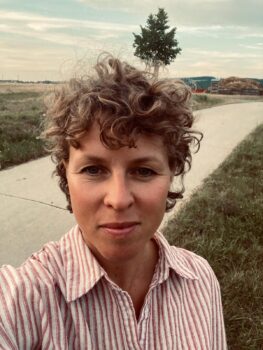
She focuses on feminist approaches in architecture, gender politics, and the issue of women’s emancipation in the context of Central and Eastern Europe. She is co-founder of the 4AM Forum for Architecture and Media, editor of the Brno Architectural Manual (www.bam.brno.cz), and curator of the exhibitions Revolting People (2011), Compact City (2011), Kill Your Idol (Brno 2011, Leipzig 2013, Asking Architecture installation in the CS Pavilion at the 13th Venice Architecture Biennale in 2012).
She is the co-author (with Tomáš Hlaváček) of the documentary films Once You Have a Job, You Have Everything (2016) and Living Against Everyone (2021), and the publication Brno for Everyone: Sensitive City Planning (2022). In 2024, she completed her doctoral studies at UMPRUM in Prague and participated in the research project Women in Architecture: Architecture and Emancipation after 1945 in the Czech Republic (www.zenyvarchitekture.cz). She is the curator of the international exhibition Liberated Space: Care – Architecture – Feminism (Bratislava City Gallery, 2023).
Photo credit: Petra Hlaváčková
I fell flat on my face in the evening
The lives of female architects in the context of gender culture of late socialism
This paper presents the results of a gender narrative analysis of interviews with female architects who were active during the Czechoslovak normalization period in the 1970s and 1980s. Petra Hlaváčková employed sociological methods and feminist theoretical concepts from the fourth wave of feminism to understand the situation of female architects and its connection to the conservative shift in state gender policy at the time. She focuses on forms of gender discrimination within the field, the impact of the second shift on careers, and the respondents’ own tools of emancipation, which could also serve as a path to a broader perception of architecture.
Zuzana Jakalová is a curator, researcher and writer. She currently works as an Assistant professor at the Department of Art Histories and Theories at Faculty of Fine arts at Brno University of Technology. She worked as the Assistant Professor at UMPRUM – Academy of Arts, Architecture and Design in Prague in the Fine Arts Studio 1.

She worked as a curator, researcher and organiser at Display – Association for Research and Collective Practice and as a curator of public programs at the City Gallery Bratislava.
She worked as artists-in-residence program curator at the Center for Contemporary Art MeetFactory in Prague. She was the curator-in-chief of Prádelna Bohnice, a gallery and multigenre artspace in the psychiatric hospital on the outskirts of Prague. She is the author and curator of a long-term discoursive project Multilogues on the Now examining intersections of feminism, disability, notions of health and coallitions of care in contemporary art and society (with Hana Janečková). She is the author and editor of a thematic czecho-slovak bookseries .txt, consisting of essays on socially and politically urgent yet publicly underrepresented topics (e.g. Bez súhlasu.txt on rape culture, Iné telá.txt on disability and impairment). Along with Zbyněk Baladrán, she is the co-author of Display´s hybrid collaborative publishing house focusing on texts between art theory and contemporary emancipatory thought. She graduated from the Faculty of Humanities at Charles University in Prague and Theory of Interactive Media at Masaryk University in Brno, completed an AKTION study fellowship at Akademie der Bildenden Künste in Vienna. Her thesis looked at ecofeminist art practices through the lens of ethics of care. She recently finished her PhD at the Faculty of Arts at Technical University in Brno researching feminist notions of emotional labor, disability politics, ecomonies of care and dehierarchising expertise in contemporary institutional art practice. She was in residency at MuseumsQuartier in Vienna, a CEC ArtsLink Residency fellow at the Triangle Arts Association in NYC, Bluecoat Liverpool, Galeria Arsenal in Bialystok, Uni Wien and others. She was juror in several selection juries, including International Visegrad Fund NYC residencies, Ministry of Culture of the Czech Republic, Slovak Arts Council, and others. She publishes widely in Flash Art CZ / SK, A2, artalk.cz, Kapitál, Artportal.hu and others.
Photo credit: Zuzana Jakalová
Výtvarná Dubnica (Dubnica Arts)
Adding to the rich tapestry of cultural life developing in the Dubnica nad Váhom and Nová Dubnica in the 1960s (e.g. one of first panoramatic cinemas in Slovakia – Nová Dubnica’s monumental Panorex Cinema – was built from 1966 till 1969), Výtvarná Dubnica, a Slovakia-wide exhibition contest for non-professional visual artists was established in 1963.
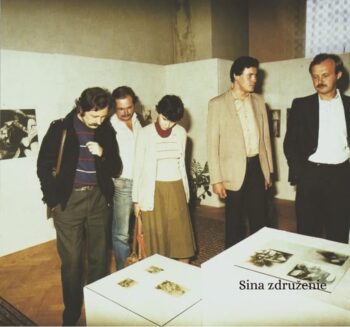
Shying away from traditional, in-situ or folklore cultural expressions in visual art, it focused on artists working in various media across the country, providing them with a professional jury and an annual exhibition in Dubnica nad Váhom. The event is still vividly running until today under the title Výtvarné spektrum, based on a public open call and three step selection process (regional, county wide and country wide). Yet, there is almost no reflection of its history, origins, or connection to the local artistic and industrial infastructures.
This paper is looking at the transformations of the contest from its inception till today, paying special attention to the infrastructural and contextual connection to the regions industry and cultural life.
Lucas Kalmus (*1993 Germany) current research and practice focuses on concepts of place-weaving, a tender mode of space-production that considers biological and non-biological lifeforms united in assemblage within contexts of cultural landscapes and land practices.
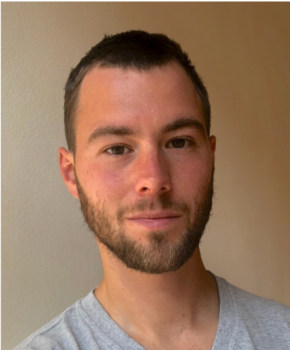
Lucas’ process often incorporates public installation, drawing and writing. As well he is interested in initiating and organising excursions, workshops, exhibitions, talks or multi-day symposia in collaboration with artists, architects, activists and scientists in order to expand the social aspect of artistic practice and knowledge production. Based in Bremen (DE), he is currently a PhD Candidate in the Binational Artistic PhD Program at the University of the Arts Bremen (DE) together with the Sint Lucas School of Arts Antwerp as part of the Antwerp Research Institute of the Arts ARIA (BE).
Photo credit : Lucas Kalmus
Of Rivers and Work: Shapes of Váh and Paradises of Longing
To still the energy hunger of the ZTS special a.s. armsfactory factory, which was founded 1937, the first hydroelectric power station of Váh in Ladce, 7km upriver from Dubnica nad Vahom, was connected to the power grid in 1936. ZTS Strategic Location at river Waag with its new 20 Megawatt power station laid the foundation for new Urban developments and heavy industry and neighboring Hydropower stations located directly at Dubnica nad Vahom next to Ilava and Nosice between 1946 and 1957. To power hydroelectric Stations, former meander Waag was canalized, while the slings and islands, that made up the form of Waag, were filled in and flattened out, leaving it to stream in a dug-out shape that mimics an almost mathematical sinus curve. With barely any remnants of its past, the present image of river Vah, leaves younger generations to believe that this is the shape of Waag. The job-giving factories replaced the life giving-river.
Nova Dubnica, the plan-city by architect Jiří Kroha built in from scratch and opened in 1957 to provide 13000 apartments for Workers of ZTS Special a.s. had its central plaza renovated in 2007. The role of central plazas is traditionally a place to hold fairs, markets and festivities or rituals that define and strengthen the local identity. Nova Dubnica’s plaza received a rounded pedestal with a roof and a fountain made of three basins and a circumventing tiled frame that functions like a bench. The cladding on the inside of the basins that is visible through the lapping water is made up of an aquamarine blue foiling, resembling the swimming pools of resort hotels in holiday destinations. The very specific blue tone inside the fountain reminds those hotels complexes set up for full convenience, which serve guests that often bare their few days off work a year to spend in what presents itself as a paradise of longing. The concept of oliday vacation is tightly linked to the full-time shift-work structure brought by industrialization.
As fountains often depict mythological aspects of the local culture it almost seems a purposeful decision that the central fountain references holiday vacationing, as in capitalist culture, paradises of longing are being marketed as an idea of perfect joy, a narrated representation to spark mental images.
As part of my residency stay, I dealt with alternative references for the central plaza of Nova Dubnica.
Bahar Noorizadeh is an artist, writer and filmmaker.
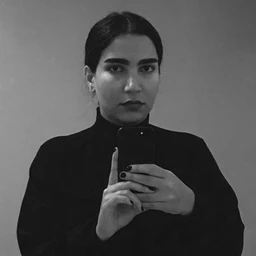
Her research examines the historical advance of speculative activity and its derivative politics in art, urban life, and finance and economics. Noorizadeh is the founder of Weird Economies, an online art platform that traces economic imaginaries extraordinary to financial arrangements of our time.
Her work has appeared at the German Pavilion, Venice Architecture Biennial (2021), Tate Modern Artists’ Cinema Program in London (2018), Transmediale Festival in Berlin (2020), DIS.Art platform (2019–ongoing), Berlinale Forum Expanded (2018), and the Biennale de l’Image en Mouvement in Geneva (2016), among others. Noorizadeh has contributed essays to e-flux Architecture, the Journal of Visual Culture, and anthologies from Sternberg Press (2022) and Duke University Press (forthcoming). She is pursuing her work as a PhD candidate in Art at Goldsmiths, University of London.
[Source: VOX, 2022]
Photo credit : Bahar Noorizadeh
Bahar Noorizadeh looks at the relationship between art and capitalism. In her practice as an artist, writer and filmmaker, she examines the conflictual and contradictory notions of imagination and speculation as they suffuse one another. Her research investigates the histories of economics, cybernetic socialism, and activist strategies against the financialization of life and the living space, asking what redistributive historical justice might look like for the present. Noorizadeh is the founder of Weird Economies, a co-authored and socially-connected project that traces economic imaginaries extraordinary to financial arrangements of our time.
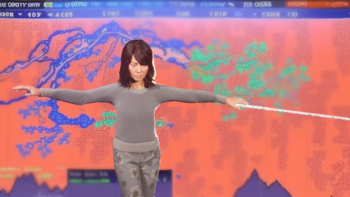
« Free to Choose”, Bahar Noorizadeh, 2023
Katja Praznik is an Associate Professor in the Arts Management Program and the Department of Global Gender and Sexuality Studies at the University at Buffalo (SUNY).
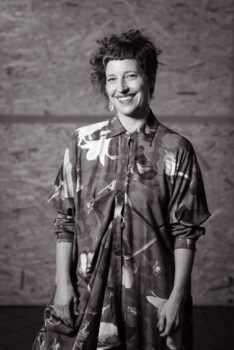
She studies labor, cultural production, and social reproduction, focusing on the invisibility and politics of artistic work. She is the author of Art Work: Invisible Labour and the Legacy of Yugoslav Socialism (University of Toronto Press, 2021), which examines how socialist cultural policies in Yugoslavia supported artistic labor and how its dismantling after 1989 reshaped conditions for art workers. Praznik is also a labor organizer and co-founder of Zasuk, a union for art workers in Slovenia. Her work has appeared in Social Text, Historical Materialism, Journal of Cultural Management and Cultural Policy, and the co-authored IETM publication Which Side Are You On? Ideas for Reaching Fair Working Conditions in the Arts (2022).
Photo credit: Jaka Babnik
The Price of Autonomy: Labor, Disenfranchisement, and the Post-Socialist Shift
What happens when artists are both workers and bearers of an idealized autonomy? In socialist Yugoslavia, cultural labor occupied this paradox: artists received pay, social security, housing, and healthcare, yet operated within an autonomous realm that framed creativity as beyond labor. From the 1970s onward, neoliberal pressures increasingly valorized autonomy while eroding material protections, a shift that disenfranchised art workers after 1989. Drawing on Art Work: Invisible Labour and the Legacy of Yugoslav Socialism (2021) and using a methodology grounded in early social reproduction analysis and feminist political economy, this talk examines how these tensions shaped artistic labor, sustained its invisibility, and continue to structure cultural production today. It also highlights contemporary strategies to reclaim the value of art work—most notably through union organizing with Slovenia’s Zasuk. By situating Yugoslav cultural policies within broader Central and Eastern European trajectories of welfare decay, labor restructuring, and resistance, it reflects on alternative solidarities capable of challenging the economic and symbolic devaluation of work.
Hannah Proctor holds a Wellcome Trust University Award at the University of Strathclyde in Glasgow.
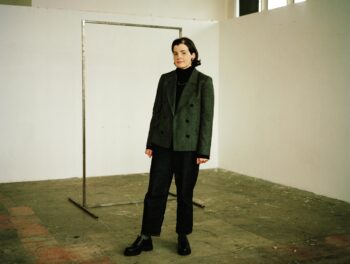
She is the author of Burnout: The Emotional Experience of Political Defeat (Verso, 2024) and is currently beginning work on three very different book projects: an academic monograph on Cold War social science, a theoretical pamphlet on revenge, and a cultural history of the end of history. She is part of the Radical Philosophy editorial collective and is a contributing editor at Parapraxis.
Photo credit: Matthew Arthur Williams
Defeat, Despair and the ‘End of History’
This talk will discuss how the ‘end of history’ figures in some influential theoretical accounts of ‘left melancholia’ and will propose that returning to the history of the actually existing ‘end of history’ complicates these arguments. The paper will also ask how it might be possible to think ‘big’ geopolitical events, in relation to ‘small’ interpersonal interactions and initiatives and whether the latter might be a source of hope in the despairing endless end times of the present.
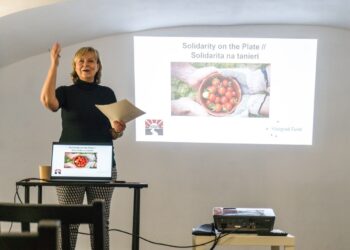
Eva Riečanská studied social anthropology and sociology.
She worked as a researcher at the Slovak Academy of Sciences, later for the UNDP regional centre for CEE countries and Central Asia and for several CSO organizations in Slovakia focusing on gender equality and women’s rights. Since 2013, she has been primarily involved with the Utopia association, working on projects related to solidarity economy and grassroot initiatives.
Peter Vittek studied philosophy and history.
He worked as a prop master, translator, and later as a publicist and political affairs commentator.
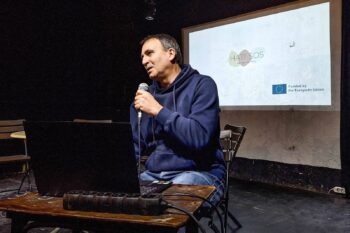 In 2010, he co-founded the Utopia association, where he has long been involved with topics of participatory democracy, solidarity economy, and support for grassroot initiatives. He participated in the designing and implementation of participatory budgeting processes in several Slovak municipalities. He currently works as a coordinator of the Human Rights Coalition for Amnesty International Slovakia.
Photos credits: Arkadiusz Wierzba
Eva Riečanská & Peter Vittek: Economic Democracy in Theory and in Practice
For a long time, the hegemonic ideology of liberalism has been trying to convince us that the real guarantor of democracy, freedom and even equality can only be economic relations based on normalized hoarding of wealth and power, economic relations that are formed and steered by just a handful of people while the rest can be excluded from participating in decision-making. Nowadays, it is increasingly clear that the concentration of power and wealth does not create more democracy. On the contrary, it produces more exclusion and authoritarianism. However, ideas about economic alternatives have been alive for many decades, and there are people who imagine and advocate for a better world for all. For a world in which also economic relations are democratic. Some of these people strive to put these ideas into practice.
One of successful strategies used by the emancipatory and anti-authoritarian movement has always been prefigurative politics: the attempt to create real-life utopias – as zones in which, already here and now, in the midst of an old, unjust and depressing world, a world without harmful hierarchies, authoritarianism and oppression, is being created and enacted in everyday practice. They stem from different traditions of thought, but they are connected by their efforts to democratize the economy, be it solidarity economy initiatives, cooperatives and mutual aid organizations or various forms of the food sovereignty movement.
We will focus on exploration of some of these alternatives: what are they, and how do they work? It is evident that critique of the system, although important and erudite, is not enough. If we do not want to completely end up in the grip of the authoritarian dystopia, it is necessary to take action and (re)invent different ways of acting and living. Are we able to act and govern our own lives?
Nicole Sabella (she/her; they/them) is an artist, cultural worker, and educatrix.
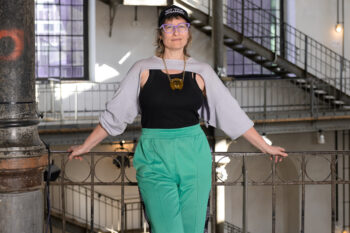
She works with artistic research methods and performative strategies based on queer-feminist,
intersectional, anti-discriminatory, participatory politics, and collaborative practices. With their help, they explore the sociopolitical connections between body, language, voice, sound, and (political) space in dynamic “choreo:spheres.”
From 2018 to 2024, Nicole was a university assistant and lecturer for performance art at the University of Art and Design Linz and a lecturer for digital media & communication worlds at the University of Applied Arts Vienna.
Since 2024, she has held the professorship for gender & space at the Academy of Fine Arts Vienna.
Their artistic and curatorial work advocates for poeto-political co-creation and « vibrational
communication » as tools for social transformation.
Photo credit: Joanna Pianka
Politicizing Abundance. A meditation on how to cut the threads between austerity, fascism and gender
„When we recognise the links between cuts, exploitation and gender, we create the possibility for deep, deep links of solidarity with people who are radically different from us.“ Lola Olufemi, Feminism interrupted.
How can we disrupt the currently dominating power dynamics between the politics of austerity, fascism and gender?
This contribution draws inspiration from initiatives and individuals such as the feminist direct action group „Sisters Uncut“, Chris Smalls, the co-founder and former president of the Amazon Labor Union or interventions from the arts and culture field and guides the participants of the conference through a set of somatic exercises as a means of stimulating collective awareness, discussion and action around a common political practice of abundance.
Barbara Spechtl is working at the CSA Ouvertura and is engaged in the Austrian CSA Network Solawi Leben and the Munus Stiftung – Boden für gutes Leben.
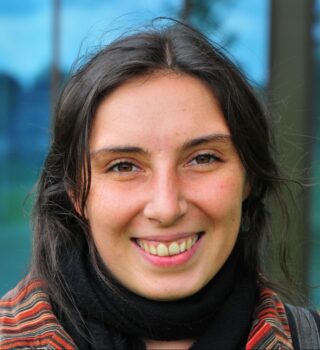
She studied Natural Resources Management and Ecological Engineering at the University of Life Sciences, Vienna, and Development Studies at the University of Vienna. Her interests lie in solidarity-based economy, agroecology, and food sovereignty.
Photo credit : Barbara Spechtl
Encounter Commoning: Experiences with Lived Solidarity-Based Economy, Empowerment and Participation Processes
The presentation uses the experience of CSA Ouvertura to highlight how solidarity-based economic principles can be put into practice, focusing on both the opportunities and challenges that arise. It will clarify how diverse forms of community engagement and participation drive solidarity-based agriculture, and closely examine alternative decision-making, collaboration, and economic approaches that challenge classical economic views.
Peter Szalay is an architectural historian.
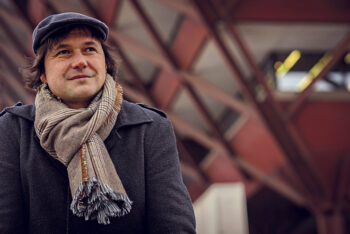 He works at the Department of Architecture of the Institute of History of the Slovak Academy of Sciences and at the Department of Art History of the Faculty of Arts, Comenius University in Bratislava. His research focuses on 20th- and 21st-century architecture from art-historical, heritage, as well as broader social and environmental perspectives.
He is the author of numerous scholarly publications in national and international journals and the co-author of several academic monographs, such as Dreaming the Capital: Architecture and Urbanism as Tools for Planning Socialist Bratislava. In Urban Planning During Socialism: Views from the Periphery. 1st Edition. Abingdon: Routledge; New York, 2024; Enlightenment, Culture, Leisure: Houses of Culture in Czechoslovakia. 1st Edition. Prague: VI PER Gallery, 2023; House of Unions / Istropolis. Bratislava: Čierne diery, 2022; Bratislava (Un)planned City. Bratislava: Slovart, 2020; Modern Bratislava. Bratislava: Marenčin PT, 2016; and Bratislava: Atlas of Mass Housing. Bratislava: Slovart, 2011.
Peter Szalay is the executive editor of the scholarly journal Architecture & Urbanism and a member of DOCOMOMO International.
Photo credit: Peter Szalay
Nová Dubnica – Trenčianske Teplice a guided tour
Nová Dubnica and Trenčianske Teplice are two markedly different towns, yet they share a certain closeness—not only in geographical terms. Each town carries within its identity a dominant functional purpose: Dubnica as a workers’ town tied to the nearby armaments factory, and Teplice as a spa town intended for patient treatment and recreation. This identity—or rather, the image formed by both residents and outsiders—has naturally evolved over time, shaped by changing historical contexts and by who is doing the interpreting and from what perspective.
The towns differ already in the circumstances of their origin. Trenčianske Teplice developed gradually, spurred by the discovery and use of thermal springs for therapeutic purposes. Nová Dubnica, on the other hand, was a purpose-built city, with a clearly defined founding date and a ceremonial laying of its foundation stone. One town emerged in successive waves of construction tied to various, often conflicting visions of what a town should be. The other was designed and built according to a single, unified plan envisioned by one architect—a kind of “genius” figure—and executed by the state.
The post-socialist transformation marked a significant turning point for both towns. Paradoxically, Nová Dubnica—founded as an ideal socialist city and one of the most important examples of socialist urbanism—has shown a surprising degree of structural stability in the thirty years since the regime’s fall. Despite the ideological foundations on which it was built having long been discredited, the town today thrives as a good place to live, with few major redevelopments having taken place.
In contrast, Trenčianske Teplice—a spa town with a once-prestigious name—has become a sleepy locality, marked by a partially constructed central spa pavilion (Kursalon) and a number of decaying sanatoriums, including the functionalist gem, the Machnáč Sanatorium. For many of the town’s residents—who live and work in neighborhoods distant from the spa core—its fading reputation as a spa destination has little relevance to their everyday lives.
One way to approach the question of a town’s identity, essence, or character is through its architecture—its architectural heritage. Landmarks, monuments, historical buildings, and public spaces are crucial elements of the city’s image, yet their recognition and value are, at their core, politically defined. The process of accepting or rejecting such heritage is deeply tied to expert evaluation and political endorsement.
This guided tour through the architectural and urban heritage of Nová Dubnica and Trenčianske Teplice aims not only to present the most significant sites and buildings but also to provoke discussion about how we perceive, talk about, and identify heritage. It seeks to explore how economic and ideological shifts in the post-socialist era have shaped these two towns—and to what extent the insights gained here can inform change in today’s cities.
Kuba Szreder is a researcher, curator, and lecturer at the Academy of Fine Arts in Warsaw.
He collaborates with artistic unions, consortia of postartistic practitioners, clusters of art researchers, collectives, and institutions in Poland, the UK, and across Europe. Szreder has edited and authored numerous catalogues, books, readers, chapters, articles, and manifestos that examine the social, economic, and theoretical dimensions of the expanded field of art. His current research focuses on artistic labour, new models of institutions, self-organisation, artistic research, and postartistic theory and practice. His book The ABC of the Projectariat: Living and Working in a Precarious Art Worldwas published in 2021 by Manchester University Press and the Whitworth.
Photo credit: Kuba Szreder
From Self-Entrepreneurship to the Commons. The Contradictions of the Semi-Peripheral Projectariat
Drawing on his research into the artistic projectariat—a cohort of freelancers living and working in a precarious art world—Kuba Szreder will examine its paradoxical class composition. On one hand, members of this group act as entrepreneurs of the self: they treat themselves as capital, investment, and source of income, and are often criticised as part of the metropolitan professional–managerial class. On the other hand, they also belong to the impoverished urban precariat, burdened with debt, low wages, and high living costs.
These contradictions are sharpened by hierarchies of unevenly distributed capital. While some artists, curators, and academics rely on inherited privilege or parental support, others must juggle multiple projects at once simply to make a living. In Central and Eastern Europe, this dynamic is intensified by the neoliberal transformation, which created a new class of highly educated, globally connected art professionals, while simultaneously exposing them to the perils of constant networking and competition with the better-resourced global elite.
This contradictory position shapes the politics of the projectariat. Symbolic capitalists by some measures, they are often estranged from the concerns of their compatriots caught up in culture wars and identity politics. Yet they also stand at the forefront of solidarity struggles, antifascist campaigns, new cooperativism, and commons-oriented activism.
Sébastien Thiéry is a political scientist and artist, founder of the PEROU – Pôle d’Exploration des Ressources Urbaines, a transdisciplinary research and action platform based in France.
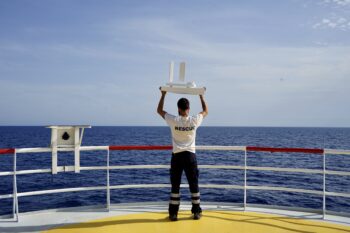
His work explores the intersection of urban space, migration, and hospitality through both theoretical inquiry and direct intervention. He leads the project Navire Avenir, a floating utopia under construction that sets out to reimagine Europe through acts of solidarity, resistance, and repair. His current work focuses on advocating for the recognition of hospitality as Intangible Cultural Heritage of Humanity.
The Navire Avenir: Hospitality, Action and Poetics Against the Neoliberal Logic
While Central and Eastern Europe have served as testing grounds for radical neoliberal policies that dismantled systems of solidarity, this intervention proposes to present the Navire Avenir as a political, poetic, and collective response to this disintegration.
The Navire Avenir is a work in progress: the construction of a ship that will set sail from Lampedusa to connect European ports, embodying a form of active hospitality, symbolic reparation, and direct action. Born from experiences in spaces of exclusion — Calais, camps, border zones — this ship carries a counter-narrative to the logic of generalized competition and the closure of social and political imaginaries.
In a context marked by the rise of the far right, democratic fatigue, and the internalization of discourses of marginalization, the Navire Avenir seeks to become a concrete utopia, an act of presence, and a form of sensitive democracy. It acknowledges the symbolic defeat of modern promises, yet proposes to begin again — from the margins — to reopen the possibility of a shared future.
This intervention will take the form of a performed reading, accompanied by the projection of archival images from the project, in order to convey the poetic and political dimensions of the Navire Avenir through both word and image. It will explore how such a project can articulate a radical critique of neoliberalism while building tangible spaces for solidarity-based experimentation.
Luke Murphy, Amy Pickles & Alice Strete (Varia): Can someone restart the server?
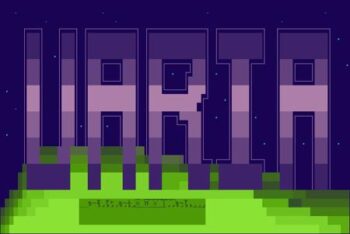
Three members of Varia will share stories about our collective server practices and digital infrastructures, other groups that inform us and how we try to activate forms of self-governance in this realm and our physical space.
Ansi art by Danny van der Kleij
Varia experiments with creating and maintaining physical and digital infrastructures needed for collective, cultural work. This involves sharing resources amongst our network by hosting different groups in the space we rent, self-hosting digital services and developing bespoke tools.

Our organisational models, including decision-making processes, mediation, conflict resolution, collective administration, maintenance and and research, are intricately reflected in our infrastructures, public programme and attitude towards being and working with one another.
We try to adapt social organisational models to our tools and administrative practices. Our collective stance opposes Big Tech; we do not use GAFAM (Google, Apple, Facebook, Amazon, and Microsoft) services nor infrastructure, instead using and developing FLOSS (Free/Libre and Open Source Software).
Varia server
Jiří Žák graduated from the Academy of Fine Arts in Prague and is currently pursuing doctoral studies at the Faculty of Fine Arts, Brno University of Technology.
He primarily works with moving images and video installations, in which research and imaginative forms of storytelling intertwine. Together with the collective 8lidí, he created the participatory theater production We Love Shooting (2023). He has exhibited in numerous institutions in the Czech Republic and abroad, including Bangkok Kunsthalle in Thailand (2024), the Kyiv Biennale (2021), and the Warsaw Biennale (2018). In 2020, he participated in the Biennale Ve Věci umění in Prague and attended Berlinale Talents in 2024.
Žák is a co-recipient of the Jindřich Chalupecký Award (2020) and the recipient of the EXIT Award (2015). In 2024, he, together with Matěj Pavlík, received the award for Best Czech Experimental Documentary at the Ji.hlava International Documentary Film Festival. In 2025, he was awarded the Rector’s Prize at Brno University of Technology. He has participated in artist residencies in Jordan, Georgia, and Spain. He is a member of Artyčok TV and was previously a member of Ateliér bez Vedoucího.
Photo credit : Jan Kolsky
The Paths of Czechoslovakian Arms: The Necropolitical Encounteurs
As a result of his residency, artist will try to contextualize the arms production in the region of Dubnica nad Váhom within the history of arms industry in Czechoslovakia and its geopolitical ambitions.
His artistic research is focused on the arms used as a diplomatic tool to establish relations with the countries of the global South during the Cold War (mostly the MENA countries during the Cold War — especially Syria, Iraq, Egypt or Libya). Žák is trying to investigate the ‘life’ of a weapon. Where and why were they exported and used? What reality did weapons create in client countries? Whose lives were affected by them? Where did the products made in Dubnica end up? And should we even care?
When discussing the history of weapons, it is also necessary to take into account the archival silence that surrounds it. How can we tell their stories?
Žák does not view the history of Czechoslovak weapons as something dead and finished, but places it in the context of the present day Slovak and Czech arms companies. These companies directly continue the famous past of the Czechoslovak arms industry and extend its legacy into current geopolitical conflicts. They thus become actors who directly participate in the necropolitical infrastructure without which these conflicts would not exist.
Deutsche Wohnen & Co. Enteignen (DWE) is a citizen’s initiative based in Berlin that is fighting against rapid rent increases and the city’s housing crisis. DWE was founded in 2018 and brings together tenants, activists, and Berlin residents who are frustrated by the rise in housing prices and the speculative behavior of large private real estate corporations. The initiative’s name refers to one of the largest of these companies, Deutsche Wohnen, which owns tens of thousands of apartments in Berlin. The initiative’s main goal is the « socialisation » (German: Vergesellschaftung) of the housing stocks of all private companies in Berlin that own more than 3,000 apartments. This takeover is intended to take place on the basis of Article 15 of the German Basic Law, which allows for the socialisation of land, natural resources, and means of production for the purpose of public welfare (in exchange for fair, non-market-rate compensation).
About the curators
Barbora Nemčeková holds a master’s degree from the Department of Audiovisual Studies at the Film and Television Faculty of the Academy of Performing Arts in Bratislava.
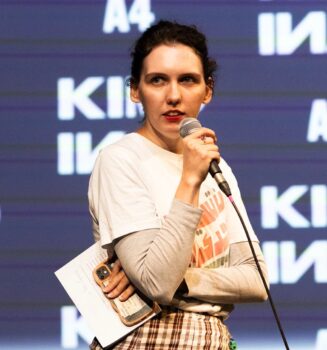 She worked as editor-in-chief of the online magazine Kinečko, headed the film section of the cultural monthly Kapitál, and was an editor at Film.sk magazine. She publishes in the film studies magazine Kino-Ikon and the feminist web magazine Druhá směna. She is the dramaturge of the independent cinema Kino inak A4.
Photo credit : Barbora Nemčeková
Ivana Rumanová is a cultural anthropologist, critic and cultural worker.
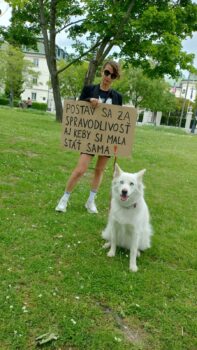
She is currently conducting a post-doc research at the Faculty of Fine Arts at Brno University of Technology and is co-launching a new study program “Art in Public Spaces” at the Faculty of Architecture and Design STU in Bratislava.
Her practice is positioned at the interstice between social sciences, art and activism, experiencing both deep enthusiasm and sincere scepticism towards all of them. She worked as a curator at the Nová synagóga Žilina and as a member of the editorial boards of the magazines Kapitál and 3/4. She used to curate solo exhibitions, but is now more interested in exploring collective practices and event- and research-based projects. She writes about art and culture and received the Věra Jirousová Award for the contribution to the field of art criticism. She is the chairwoman of the art and culture workers’ union Kultúrne odbory (K.O.), was a founding member of the non-partisan civic initiative of the cultural community Otvorená Kultúra (OK!), and of the Culture Strike committee.
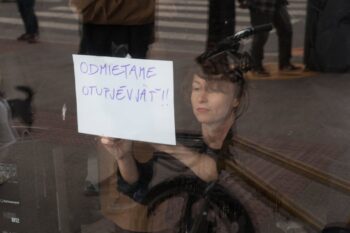
Photos credits : Ivana Rumanová & Adam Balogh
About the moderators
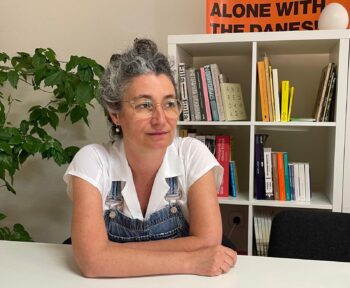
Zuzana Flašková is the Chief Curator and Head of Collection at the Bratislava City Gallery, where she has curated Kvet Nguyễn’s extensive monographic exhibition Till the Water Meets the Shore. Previously, she worked at Tate Britain, London as Curator of Modern and Contemporary Art (2016-2023) on diverse range of projects and exhibitions, such as Women in Revolt, Art and Activism in the UK 1970-1990 (with Linsey Young, 2023), Heather Phillipson Rupture no 1: blowtorching the bitten beach (with Elsa Coustou and Linsey Young, 2021), the Paula Rego retrospective (with Elena Crippa, 2021) as well as the Art Now exhibitions of France-Lise McGurn, Joanna Piotrowska and Jesse Darling. Prior to that, she was the Deutsche Börse Photography Prize Coordinator at The Photographers’ Gallery, London (2008 to 2013). She holds an MA in Theory of Contemporary Art from Goldsmiths, University of London (2010) and in Theatre Studies and English from the Academy of Performing Arts (VŠMU) and the Comenius University, Bratislava (2000).
Photo credit : Zuzana Flašková
Anna Remešová is a researcher and cultural journalist who studied art history and contemporary art.
She is currently a PhD candidate at the Academy of Fine Arts in Prague, where her research focuses on the history of the Náprstek Museum of Asian, African and American Cultures in Prague and its involvement in colonial and capitalist relations at the end of the 19th century. Anna also works as an independent curator and collaborator of contemporary artists. Her main interests lie in the institutional conditions of art and in contemporary art’s relation to current politics and society. Since 2020, she has been collaborating with the Hraničář Gallery in Ústí nad Labem, for which she has curated two six-month exhibitions dedicated to the connection between art and extractivism.
Photo credit : Tomáš Lumpe
About the movies
A documentary film about one of the most important buildings of the 20th century – the abandoned Machnáč sanatorium in the spa town of Trenčianske Teplice. A constructivist building that was a celebration of progress, a manifestation of the architect’s idea of humanism. In it, the architect demonstrated his ideas of technical and social progress and built a symbol of modern society. Today: a modernist ruin of utopia. The ocean liner that was wrecked in the spa park. The owners have no interest in looking after a building that is not profitable. The film explores the phenomenon of this extraordinary building through the people who have not given up the fight to save Machnáč.
Free to Choose (dir. Bahar Noorizadeh, 2023, 35’58, digital) is an operatic financial sci-fi (fi-fi), narrated by Milton Friedman, in which we encounter the credit banking system as a time travelling machine.
In 1997, in post economic crash Hong Kong, Philip Tose, ex-race car driver and CEO of an insolvent company travels to the future to borrow a lump sum from his older self to rescue his business. Hong Kong in 2047 turns out not to be very different from the Hong Kong of “One Country, Two systems”: centralisation has not eradicated nepotism, and activism has become rating activism: young people advocating for free time travel for everyone, including the untrustworthy and the discredited of a corrupt credit system.
In the background is superstar economist and real-life evangelist Milton Friedman’s myth of neoliberalism as represented by Hong Kong: In his long career as a market ideologue and advisor to the conservative governments of the US and the UK, Friedman hailed the city as the modern exemplar of free markets, needless of heavy-handed government planning and control. “If you want to see Capitalism in action, you should go to Hong Kong.”
Much like the economic worlds built in metaverse and gaming platforms today, Hong Kong was the testing ground for the parable of neoliberalism. Once certified in its advanced colony, neoliberalism would return to shape the economic policies of Western powers in the decades to come. In 2023, despite once claiming the highest rate of public housing in the world, Hong Kong now holds one of the deepest wealth gaps and one of the most lucrative real estate markets on the planet.
The film is set in Nova Dubnica. A psychological story of a young boy who, after moving from the village to the city, has to cope with a new social and cultural environment. The story takes place in the early 1950s during the period of industrialisation of Slovakia.