Medzinárodná konferencia / After Industry
Work hard, pay hard. Existuje politická demokracia bez ekonomickej?
Nová Dubnica a Trenčianske Teplice sa na dva dni stanú centrom diskusií o demokracii a solidarite. Podujatie Work Hard, Pay Hard ponúkne spojenie umenia, inšpiratívnych myšlienok a reflexie o tom, čo znamená spolupráca a zodpovednosť v dnešnej spoločnosti.
29. – 30. október 2025 Nová Dubnica
30. október 2025 Trenčianske Teplice
Účastníctvo (abecedne):
Deutsche Wohnen & Co. Enteignen (DE), Adam Galko (SK), Kristen Ghodsee (US), Petra Hlaváčková (CZ), Zuzana Jakalová (SK), Rosamund Johnston (AT), Andrea Kalinová (SK), Lucas Kalmus (DE), Denis Kozerawski (SK), Bahar Noorizadeh (Iran / Can), Katja Praznik (SI), Hannah Proctor (UK), Eva Riečanská & Peter Vittek (SK), Nicole Sabella (AT) Kuba Szreder (PL), Peter Szalay (SK), Sébastien Thiéry (FR), Lucia Tkáčová (SK), Jiří Žák (CZ)
Kurátorka: Ivana Rumanová
Filmová kurátorka: Barbora Nemčeková
Produkcia: Michaela Kacsiová
Organizátor: Cluster EUNIC Bratislava*, FaVU – Fakulta výtvarných umění Vysokého učení technického v Brně
* Francúzsky inštitút na Slovensku, Veľvyslanectvo Francúzskej republiky na Slovensku, Goetheho inštitút Bratislava, České centrum Bratislava, Veľvyslanectvo Španielska v Bratislave, Instituto Cervantes Bratislava, Rakúske kultúrne fórum Bratislava, Veľvyslanectvo Holandského kráľovstva v Bratislave, Poľský inštitút Bratislava, Kontaktné miesto – Valónsko-Brusel International, Veľvyslanectvo Spolkovej republiky Nemecko Bratislava, Veľvyslanectvo Helénskej republiky na Slovensku, Veľvyslanectvo Cyperskej republiky na Slovensku, Veľvyslanectvo Slovinskej republiky v Bratislave, Bulharský kultúrny inštitút Bratislava, Maďarský kultúrny inštitút Bratislava, Taliansky inštitút Bratislava, Österreich Institut Bratislava, Zastúpenie Európskej komisie na Slovensku.
Keď sa Milton Friedman na začiatku 90. rokov počas svojej cesty po strednej a východnej Európe spýtal elitných maďarských ekonómov „Kto je vlastníkom štátnych podnikov?“, jeden z prítomných odpovedal: „No, spoločnosť ako celok.“
– „Nie spoločnosť, ale ľudia!“
Friedmanova odpoveď vychádza z predstavy primárnosti individuálneho vlastníctva, individuálnej slobody a voľného trhu. Tento pohľad je však nutné ukotviť v európskom kontexte, kde tradície verejného vlastníctva, sociálneho zabezpečenia a kolektívnej zodpovednosti dlhodobo formovali ekonomický a politický život. Friedmanovu odpoveď však možno považovať za podstatu širších politických, ekonomických a kultúrnych transformácií po roku 1989. Popri dôležitých procesoch politickej demokratizácie prispeli tieto ekonomické zmeny k oslabeniu existujúcich mechanizmov solidarity v mene slobody súťaže.
Zároveň je nutné zdôrazniť, že korupcia, politický populizmus a oslabovanie demokratických inštitúcií sú globálnymi javmi. Oddeľovanie politickej a ekonomickej demokracie preto nemožno považovať za regionálny problém postsocialistických krajín. Vzniká tým zároveň príležitosť pre nové formy vzájomného medzinárodného a medzisektorového vzdelávania sa, výmeny skúseností a experimentovania so sieťami solidarity. Čo keby trvali na tom, že „spoločnosť existuje“ a „existujú alternatívy“, a spoločne preskúmali ich potenciálne podoby a reaktualizácie?
Konferencia bude túto tému skúmať prostredníctvom štyroch prepojených panelov:
1) Ekonomické a sociálne dôsledky transformácie po roku 1989
2) Nové pohľady na priemyselnú produkciu a dedičstvo modernizmu
3) Ekonomická demokracia
4) Resuscitácia utópií
Podujatie nebude pozostávať len zo striktne akademických formátov. Skôr sa pokúsi prepojiť rôzne podoby zdieľania poznania a bytia spolu: prednášky, prechádzky s komentárom urbanistov, diskusie a intervencie umelcov, kúpanie v termálnych kúpeľoch, premietanie filmov, kombinujúce telesné a kolektívne zážitky s akademickým zdieľaním vedomostí.
Konferencia sa zaoberá súčasným sociálnym, ekonomickým a územným kontextom regiónu Novej Dubnice a Trenčianskych Teplíc vo svetle historického vývoja a transformácií, ktorými prešli, v súvislosti s postsocialistickou transformáciou v 90. rokoch a súčasnými viacúrovňovými krízami. Koná sa v rámci európskeho projektu „After industry, Regeneration of Utopia“ (Po priemysle, regenerácia utópií).
Podporené z Fondu asociácie kultúrnych inštitútov EUNIC a Fondu francúzsko-nemeckej kultúrnej spolupráce.
O rečníkoch a ich prejave
Neutralizácia práce (pracovný názov)
Krátky experimentálny film Neutralizácia práce vzniká v areáli bývalých ZŤS v Dubnici nad Váhom v priestore neutralizačnej stanice chemických látok. Chemikálie v minulosti pochádzali najmä zo zbrojnej výroby. Po jej útlme produkcie v 90. rokoch sa tento technický priestor začal postupne meniť. Prázdne sedimentačné jamy boli zasypané a premenené na záhrady. V priebehu rokov tu postupne vznikol živý ekosystém: vinič, ovocné stromy, citrusy v skladoch, vtáčie búdky, hmyzie hotely, jazierka či bocianie hniezdo. Film sleduje premenu prostredia, v ktorom sa stretáva toxicita a regenerácia, práca a voľný čas, priemysel a príroda. Film odkazuje na paradox tohto priestoru, v ktorom sa chemický proces neutralizácie spája s prácou a jej premenu na starostlivosť, rast a neformálnu tvorivosť mimo rámca produktivity a zisku.
Neutralization of Work (working title)
The short experimental film Neutralization of Work is set in the area of the former ZŤS industrial complex in Dubnica nad Váhom, within the premises of a chemical neutralization station. In the past, the chemicals processed here originated mainly from arms production. After the decline of military manufacturing in the 1990s, this technical site began to change gradually. Empty sedimentation tanks were filled in and transformed into gardens. Over the years, a living ecosystem has emerged: grapevines, fruit trees, citrus plants growing in warehouses, birdhouses, insect hotels, ponds, and even a stork’s nest. The film traces the transformation of an environment where toxicity and regeneration, labor and leisure, industry and nature intersect. It reflects the paradox of a place where the chemical process of neutralization intertwines with the transformation of work itself into care, growth, and informal creativity beyond the framework of productivity and profit.
Abstract
Defeat, Despair and the ‚End of History‘
This talk will discuss how the ‚end of history‘ figures in some influential theoretical accounts of ‚left melancholia‘ and will propose that returning to the history of the actually existing ‚end of history‘ complicates these arguments. The paper will also ask how it might be possible to think ‚big‘ geopolitical events, in relation to ‚small‘ interpersonal interactions and initiatives and whether the latter might be a source of hope in the despairing endless end times of the present.
Bio: Hannah Proctor holds a Wellcome Trust University Award at the University of Strathclyde in Glasgow. She is the author of Burnout: The Emotional Experience of Political Defeat (Verso, 2024) and is currently beginning work on three very different book projects: an academic monograph on Cold War social science, a theoretical pamphlet on revenge, and a cultural history of the end of history. She is part of the Radical Philosophy editorial collective and is a contributing editor at Parapraxis.
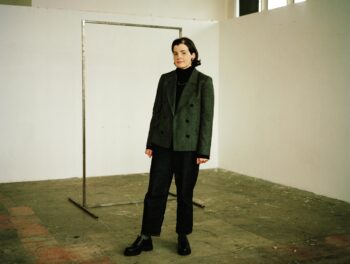
Photo credit: Matthew Arthur Williams
The Price of Autonomy: Labor, Disenfranchisement, and the Post-Socialist Shift
What happens when artists are both workers and bearers of an idealized autonomy? In socialist Yugoslavia, cultural labor occupied this paradox: artists received pay, social security, housing, and healthcare, yet operated within an autonomous realm that framed creativity as beyond labor. From the 1970s onward, neoliberal pressures increasingly valorized autonomy while eroding material protections, a shift that disenfranchised art workers after 1989. Drawing on Art Work: Invisible Labour and the Legacy of Yugoslav Socialism (2021) and using a methodology grounded in early social reproduction analysis and feminist political economy, this talk examines how these tensions shaped artistic labor, sustained its invisibility, and continue to structure cultural production today. It also highlights contemporary strategies to reclaim the value of art work—most notably through union organizing with Slovenia’s Zasuk. By situating Yugoslav cultural policies within broader Central and Eastern European trajectories of welfare decay, labor restructuring, and resistance, it reflects on alternative solidarities capable of challenging the economic and symbolic devaluation of work.
Katja Praznik is an Associate Professor in the Arts Management Program and the Department of Global Gender and Sexuality Studies at the University at Buffalo (SUNY). She studies labor, cultural production, and social reproduction, focusing on the invisibility and politics of artistic work. She is the author of Art Work: Invisible Labour and the Legacy of Yugoslav Socialism (University of Toronto Press, 2021), which examines how socialist cultural policies in Yugoslavia supported artistic labor and how its dismantling after 1989 reshaped conditions for art workers. Praznik is also a labor organizer and co-founder of Zasuk, a union for art workers in Slovenia. Her work has appeared in Social Text, Historical Materialism, Journal of Cultural Management and Cultural Policy, and the co-authored IETM publication Which Side Are You On? Ideas for Reaching Fair Working Conditions in the Arts (2022).
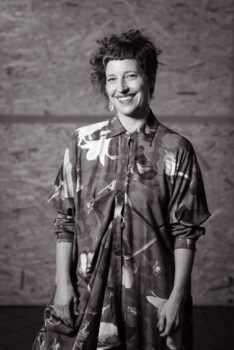
Photo credit: Jaka Babnik
“The Social Consequences of the Economic Transition”
After the fall of the Berlin Wall in 1989, more than 400 million people suddenly found themselves in a new reality, a dramatic transition from state socialist and centrally planned workers‘ states to liberal democracy (in most cases) and free markets. Thirty years later, postsocialist citizens remain sharply divided on the legacies of transition. Was it a success that produced great progress after a short recession, or a socio-economic catastrophe foisted on the East by Western capitalists? Taking Stock of Shock aims to uncover the truth using a unique, interdisciplinary investigation into the social consequences of transition—including the rise of authoritarian populism and xenophobia. Showing that economic, demographic, sociological, political scientific, and ethnographic research produce contradictory results based on different disciplinary methods and data, Kristen Ghodsee and Mitchell A. Orenstein triangulate the results. They find that both the J-curve model, which anticipates sustained growth after a sharp downturn, and the „disaster capitalism“ perspective, which posits that neoliberalism led to devastating outcomes, have significant basis in fact. While substantial percentages of the populations across a variety of postsocialist countries enjoyed remarkable success, prosperity, and progress, many others suffered an unprecedented socio-economic catastrophe. Ghodsee and Orenstein conclude that the promise of transition still remains elusive for many and offer policy ideas for overcoming negative social and political consequences.
Academic Bio for Kristen Ghodsee
Kristen R. Ghodsee is Professor of Russian and East European Studies and a member of the graduate groups in anthropology and history at the University of Pennsylvania in Philadelphia. She is the author of twelve books, which have been cumulatively translated into 19 languages. Her most recent monograph is Everyday Utopia: What 2000 Years of Wild Experiences Can Teach Us about the Good Life with Simon & Schuster in 2023. She has written for articles for outlets such as The New York Times, The Washington Post, The New Republic, The Los Angeles Review of Books, Jacobin, Die Tageszeitung, and Le Monde Diplomatique. Ghodsee has held residential research fellowships at the Institute for Advanced Study; the Radcliffe Institute for Advanced Study; the Woodrow Wilson International Center for Scholars; the Freiburg Institute for Advanced Studies; the Imre Kertész Kolleg at the Friedrich-Schiller-Universität in Jena; the Max Planck Institute for Demographic Research; the Aleksanteri Institute of the University of Helsinki; and the Center for History at Sciences Po in Paris. In 2012, Ghodsee won a John Simon Guggenheim Fellowship for her work in Anthropology and Cultural Studies. She has served as the president of the Society for Humanistic Anthropology and the Association of Members of the Institute for Advanced Study.
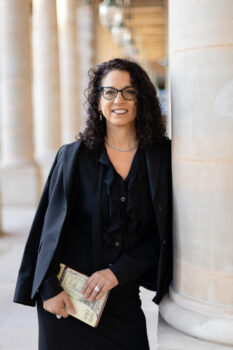
Photo credit: Elena Hmeleva
From Self-Entrepreneurship to the Commons. The Contradictions of the Semi-Peripheral Projectariat
Drawing on his research into the artistic projectariat—a cohort of freelancers living and working in a precarious art world—Kuba Szreder will examine its paradoxical class composition. On one hand, members of this group act as entrepreneurs of the self: they treat themselves as capital, investment, and source of income, and are often criticised as part of the metropolitan professional–managerial class. On the other hand, they also belong to the impoverished urban precariat, burdened with debt, low wages, and high living costs.
These contradictions are sharpened by hierarchies of unevenly distributed capital. While some artists, curators, and academics rely on inherited privilege or parental support, others must juggle multiple projects at once simply to make a living. In Central and Eastern Europe, this dynamic is intensified by the neoliberal transformation, which created a new class of highly educated, globally connected art professionals, while simultaneously exposing them to the perils of constant networking and competition with the better-resourced global elite.
This contradictory position shapes the politics of the projectariat. Symbolic capitalists by some measures, they are often estranged from the concerns of their compatriots caught up in culture wars and identity politics. Yet they also stand at the forefront of solidarity struggles, antifascist campaigns, new cooperativism, and commons-oriented activism.
KUBA SZREDER is a researcher, curator, and lecturer at the Academy of Fine Arts in Warsaw. He collaborates with artistic unions, consortia of postartistic practitioners, clusters of art researchers, collectives, and institutions in Poland, the UK, and across Europe. Szreder has edited and authored numerous catalogues, books, readers, chapters, articles, and manifestos that examine the social, economic, and theoretical dimensions of the expanded field of art. His current research focuses on artistic labour, new models of institutions, self-organisation, artistic research, and postartistic theory and practice. His book The ABC of the Projectariat: Living and Working in a Precarious Art Worldwas published in 2021 by Manchester University Press and the Whitworth.
Politicizing Abundance.
A meditation on how to cut the threads between austerity, fascism and gender
„When we recognise the links between cuts, exploitation and gender, we create the possibility for deep, deep links of solidarity with people who are radically different from us.“
Lola Olufemi, Feminism interrupted
How can we disrupt the currently dominating power dynamics between the politics of austerity, fascism and gender?
This contribution draws inspiration from initiatives and individuals such as the feminist direct action group „Sisters Uncut“, Chris Smalls, the co-founder and former president of the Amazon Labor Union or interventions from the arts and culture field and guides the participants of the conference through a set of somatic exercises as a means of stimulating collective awareness, discussion and action around a common political practice of abundance.
Short bio
Nicole Sabella (she/her; they/them) is an artist, cultural worker, and educatrix.
She works with artistic research methods and performative strategies based on queer-feminist,
intersectional, anti-discriminatory, participatory politics, and collaborative practices. With their help, they explore the sociopolitical connections between body, language, voice, sound, and (political) space in dynamic “choreo:spheres.”
From 2018 to 2024, Nicole was a university assistant and lecturer for performance art at the University of Art and Design Linz and a lecturer for digital media & communication worlds at the University of Applied Arts Vienna.
Since 2024, she has held the professorship for gender & space at the Academy of Fine Arts Vienna.
Their artistic and curatorial work advocates for poeto-political co-creation and „vibrational
communication“ as tools for social transformation.
I fell flat on my face in the evening
The lives of female architects in the context of gender culture of late socialism
This paper presents the results of a gender narrative analysis of interviews with female architects who were active during the Czechoslovak normalization period in the 1970s and 1980s. Petra Hlaváčková employed sociological methods and feminist theoretical concepts from the fourth wave of feminism to understand the situation of female architects and its connection to the conservative shift in state gender policy at the time. She focuses on forms of gender discrimination within the field, the impact of the second shift on careers, and the respondents‘ own tools of emancipation, which could also serve as a path to a broader perception of architecture.
Petra Hlaváčková is an author, curator, and documentary filmmaker. Together with Nicole Sabella, she runs the Gender & Space studio at the Academy of Fine Arts in Vienna. She focuses on feminist approaches in architecture, gender politics, and the issue of women’s emancipation in the context of Central and Eastern Europe. She is co-founder of the 4AM Forum for Architecture and Media, editor of the Brno Architectural Manual (www.bam.brno.cz), and curator of the exhibitions Revolting People (2011), Compact City (2011), Kill Your Idol (Brno 2011, Leipzig 2013, Asking Architecture installation in the CS Pavilion at the 13th Venice Architecture Biennale in 2012).
She is the co-author (with Tomáš Hlaváček) of the documentary films Once You Have a Job, You Have Everything (2016) and Living Against Everyone (2021), and the publication Brno for Everyone: Sensitive City Planning (2022). In 2024, she completed her doctoral studies at UMPRUM in Prague and participated in the research project Women in Architecture: Architecture and Emancipation after 1945 in the Czech Republic (www.zenyvarchitekture.cz). She is the curator of the international exhibition Liberated Space: Care – Architecture – Feminism (Bratislava City Gallery, 2023).
Zuzana Jakalová
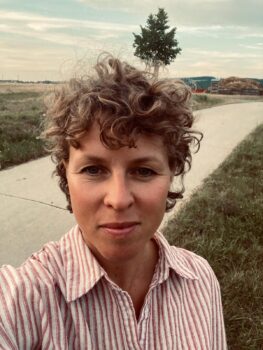
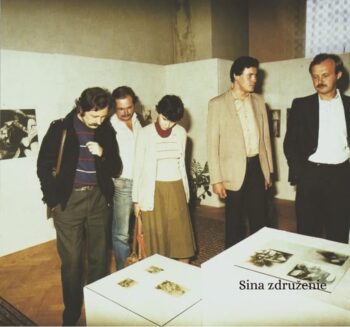
Adding to the rich tapestry of cultural life developing in the Dubnica nad Váhom and Nová Dubnica in the 1960s (e.g. one of first panoramatic cinemas in Slovakia – Nová Dubnica’s monumental Panorex Cinema – was built from 1966 till 1969), Výtvarná Dubnica, a Slovakia-wide exhibition contest for non-professional visual artists was established in 1963. Shying away from traditional, in-situ or folklore cultural expressions in visual art, it focused on artists working in various media across the country, providing them with a professional jury and an annual exhibition in Dubnica nad Váhom. The event is still vividly running until today under the title Výtvarné spektrum, based on a public open call and three step selection process (regional, county wide and country wide). Yet, there is almost no reflection of its history, origins, or connection to the local artistic and industrial infastructures.
This paper is looking at the transformations of the contest from its inception till today, paying special attention to the infrastructural and contextual connection to the regions industry and cultural life.
Nová Dubnica – Trenčianske Teplice a guided tour
Nová Dubnica and Trenčianske Teplice are two markedly different towns, yet they share a certain closeness—not only in geographical terms. Each town carries within its identity a dominant functional purpose: Dubnica as a workers’ town tied to the nearby armaments factory, and Teplice as a spa town intended for patient treatment and recreation. This identity—or rather, the image formed by both residents and outsiders—has naturally evolved over time, shaped by changing historical contexts and by who is doing the interpreting and from what perspective.
The towns differ already in the circumstances of their origin. Trenčianske Teplice developed gradually, spurred by the discovery and use of thermal springs for therapeutic purposes. Nová Dubnica, on the other hand, was a purpose-built city, with a clearly defined founding date and a ceremonial laying of its foundation stone. One town emerged in successive waves of construction tied to various, often conflicting visions of what a town should be. The other was designed and built according to a single, unified plan envisioned by one architect—a kind of “genius” figure—and executed by the state.
The post-socialist transformation marked a significant turning point for both towns. Paradoxically, Nová Dubnica—founded as an ideal socialist city and one of the most important examples of socialist urbanism—has shown a surprising degree of structural stability in the thirty years since the regime’s fall. Despite the ideological foundations on which it was built having long been discredited, the town today thrives as a good place to live, with few major redevelopments having taken place.
In contrast, Trenčianske Teplice—a spa town with a once-prestigious name—has become a sleepy locality, marked by a partially constructed central spa pavilion (Kursalon) and a number of decaying sanatoriums, including the functionalist gem, the Machnáč Sanatorium. For many of the town’s residents—who live and work in neighborhoods distant from the spa core—its fading reputation as a spa destination has little relevance to their everyday lives.
One way to approach the question of a town’s identity, essence, or character is through its architecture—its architectural heritage. Landmarks, monuments, historical buildings, and public spaces are crucial elements of the city’s image, yet their recognition and value are, at their core, politically defined. The process of accepting or rejecting such heritage is deeply tied to expert evaluation and political endorsement.
This guided tour through the architectural and urban heritage of Nová Dubnica and Trenčianske Teplice aims not only to present the most significant sites and buildings but also to provoke discussion about how we perceive, talk about, and identify heritage. It seeks to explore how economic and ideological shifts in the post-socialist era have shaped these two towns—and to what extent the insights gained here can inform change in today’s cities.
For Work hard, pay hard. Central and Eastern Europe as the avant-garde of the welfare
decay.
29-30.10. 2025
Nová Dubnica, Trenčianske Teplice, Slovakia
Title of the intervention:
The Navire Avenir: Hospitality, Action and Poetics Against the Neoliberal Logic
Sébastien Thiéry, political scientist-artist, PEROU – Navire Avenir
Abstract:
While Central and Eastern Europe have served as testing grounds for radical neoliberal policies that dismantled systems of solidarity, this intervention proposes to present the Navire Avenir as a political, poetic, and collective response to this disintegration.
The Navire Avenir is a work in progress: the construction of a ship that will set sail from Lampedusa to connect European ports, embodying a form of active hospitality, symbolic reparation, and direct action. Born from experiences in spaces of exclusion — Calais, camps, border zones — this ship carries a counter-narrative to the logic of generalized competition and the closure of social and political imaginaries.
In a context marked by the rise of the far right, democratic fatigue, and the internalization of discourses of marginalization, the Navire Avenir seeks to become a concrete utopia, an act of presence, and a form of sensitive democracy. It acknowledges the symbolic defeat of modern promises, yet proposes to begin again — from the margins — to reopen the possibility of a shared future.
This intervention will take the form of a performed reading, accompanied by the projection of archival images from the project, in order to convey the poetic and political dimensions of the Navire Avenir through both word and image. It will explore how such a project can articulate a radical critique of neoliberalism while building tangible spaces for solidarity-based experimentation.
Bio :

The Paths of Czechoslovakian Arms: The Necropolitical Encounteurs
As a result of his residency, artist Jiří Žák will try to contextualize the arms production in the region of Dubnica nad Váhom within the history of arms industry in Czechoslovakia and its geopolitical ambitions.
His artistic research is focused on the arms used as a diplomatic tool to establish relations with the countries of the global South during the Cold War (mostly the MENA countries during the Cold War — especially Syria, Iraq, Egypt or Libya). Žák is trying to investigate the ‘life’ of a weapon. Where and why were they exported and used? What reality did weapons create in client countries? Whose lives were affected by them? Where did the products made in Dubnica end up? And should we even care?
When discussing the history of weapons, it is also necessary to take into account the archival silence that surrounds it. How can we tell their stories?
Žák does not view the history of Czechoslovak weapons as something dead and finished, but places it in the context of the present day Slovak and Czech arms companies. These companies directly continue the famous past of the Czechoslovak arms industry and extend its legacy into current geopolitical conflicts. They thus become actors who directly participate in the necropolitical infrastructure without which these conflicts would not exist.
BIO:
(CZ)
Jiří Žák absolvoval na Akademii výtvarných umění v Praze a v současné době se věnuje doktorskému studiu na Fakultě výtvarných umění VUT v Brně. Pracuje zejména s pohyblivým obrazem a video-instalacemi, v nichž se prolíná výzkumná složka a imaginativní formy vyprávění. Spolu s kolektivem 8lidí vytvořil participativní divadelní inscenaci We Love Shooting (2023). Vystavoval v řadě institucí v ČR i v zahraničí (Bangkok Kunsthalle v Thajsku 2024, Kyjevské bienále 2021, Varšavské bienále 2018). V roce 2020 byl součástí Bienále Ve Věci umění v Praze. Účastnil se Berlinale Talents 2024. Žák je spolu-laureátem Ceny Jindřicha Chalupeckého za rok 2020 a laureátem ceny EXIT za rok 2015. V roce 2024 získal spolu s Matějem Pavlíkem cenu za Nejlepší český experimentální dokumentární film na MFDF Ji.hlava. V roce 2025 obdržel Cenu rektora na univerzitě Vysokého učení technického v Brně. Absolvoval umělecké rezidence v Jordánsku, Gruzii nebo Španělsku. Je člen Artyčok TV a v minulosti také člen Ateliéru bez Vedoucího.
(EN)
Jiří Žák graduated from the Academy of Fine Arts in Prague and is currently
pursuing his PhD studies at the Faculty of Fine Arts at Brno University of Technology. He works primarily with moving images and video installations that combine research with imaginative forms of storytelling. Together with a theater group 8lidí, he created the participatory theater production We Love Shooting (2023). He has exhibited at a number of institutions in the international context (Bangkok Kunsthalle in Thailand 2024, Kiev Biennale 2021, Warsaw Biennale 2018). In 2020, he was part of the Biennale Matter of Art Prague. He participated in Berlinale Talents 2024. Žák is a co-holder of the Jindřich Chalupecký Award for 2020 and laureate of the EXIT Award for 2015. In 2024, together with Matěj Pavlík, he won the award for Best Czech Experimental Documentary Film at the Ji.hlava International Documentary Film Festival. In 2025, he received the Rector’s Award for Students at the Brno University of Technology. He has completed artistic residencies in Jordan, Georgia, and Spain. He is a member of Artyčok TV and was in the past also a member of Studio Without Master.
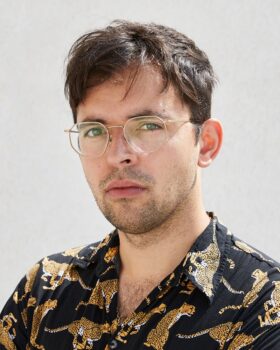
Photo credit: Jan Kolsky